Agoraphobie : 5 clés pour des expositions plus faciles
L’agoraphobie s’installe à cause de tentatives répétées d’éviter la peur : plus on évite certaines situations, plus nous renforçons notre peur et moins nous nous sentons capables de les affronter. Pour en guérir, il est essentiel de reprendre le processus en sens inverse, c’est-à-dire de se ré-exposer progressivement aux situations redoutées. Affronter notre peur alors que nous l’avons toujours évitée demande beaucoup de volonté et de courage. Voyons 5 clés pour rendre les expositions plus faciles.
Clé n°1 : Donnez un sens à vos expositions
Parfois la peur nous empêche de faire certaines choses depuis tellement longtemps qu’on finit par considérer notre vie comme « normale ». On oublie à quoi ressemblerait notre vie si elle n’était pas si restreinte à cause de nos peurs. Une part de nous peut même se résigner à l’idée de ne plus jamais pouvoir avoir une vie active, libre et sereine. Il faut donc vous reconnecter avec votre source de joie et de plaisir.
Imaginez que, d’un coup de baguette magique, vous soyez guéri. Qu’est-ce que vous auriez envie de faire ? Qu’est-ce qui vous enthousiasmerait, qui vous apporterait de la joie, qui donnerait un sens à votre vie ? Faites une liste de toutes ces activités.
Trouvez des objectifs qui vous motivent et vous donnent le sourire rien qu’en y pensant. Une exposition sera plus facile si vous y mettez un sens derrière, un but ou une notion de plaisir. Dire « je veux retourner dans les magasins » n’est pas suffisant. Il faut trouver votre « pourquoi », votre motivation profonde. Est-ce pour aller chez le fleuriste pour acheter un bouquet de fleur pour votre femme, pour aller au magasin de jouet pour trouver un cadeau pour vos enfants, aller dans la boutique qui vend la paire de chaussure dont vous rêvez tant, … ?
Vous voyez un peu la différence de motivation qu’il peut y avoir à faire nos expositions avec la pensée « chaque jour, il faut que je me force à entrer dans un magasin » et la pensée « chaque jour, je vais essayer d’entrer chez ce fleuriste car je veux faire plaisir à ma femme ». Le sens n’est pas le même, dans le premier cas, c’est une corvée et l’objectif semble lointain, je me force parce qu’il le faut bien si je veux guérir un jour. Dans le second cas, il y a une vraie motivation derrière, cet objectif est concret et a un sens évident pour moi et j’ai déjà le sourire en pensant à ma réussite.
Clé n°2 : Découpez une exposition en petites étapes
Une fois que vous avez votre liste, classer les activités qui vous feraient plaisir selon le niveau d’anxiété qu’elles génèrent chez vous. Ainsi, vous aurez une idée de par où commencer vos expositions. Pour vous donner une idée, voici ma liste au moment où je ne savais plus pratiquement plus sortir de la maison :
Aller au supermarché seule (niveau d’anxiété 8/10)
Aller boire un verre en terrasse avec mes amis (niveau d’anxiété 9/10)
Aller nager à la piscine (niveau d’anxiété 9/10)
Aller manger au restaurant avec mon amoureux (niveau d’anxiété 10/10)
Refaire des balades en nature (niveau d’anxiété 10/10)
Partir en vacances (niveau d’anxiété 20/10)
Si même le premier élément de votre liste vous semble inenvisageable pour le moment, pas de panique ! Vous pouvez découper votre exposition en petites étapes plus abordable pour vous (niveau d’anxiété inférieur à 6/10). Dans mon cas, la simple idée de rentrer dans un supermarché me terrorisait. J’ai donc procédé par étapes :
Je me suis d’abord rendue plusieurs fois à pieds jusqu’à l’entrée du supermarché
Je suis ensuite rentrée dans le supermarché, mais sans rien acheter
J’ai ensuite acheté un seul produit, situé près de la sortie
Et ainsi de suite…
L’idée, c’est de répéter la première étape jusqu’à ce que vous y soyez habitué et que vous vous sentiez à l’aise. Ensuite seulement, vous passez à l’étape suivante.
Clé n°3 : mettez-vous dans un état de confiance avant vos expositions
Vos expositions auront évidemment plus de chances de réussite si vous partez confiant plutôt que si vous y allez avec déjà plein de pensées anxieuses dans la tête. Pour cela, vous avez plusieurs solutions :
Répéter des phrases de puissance : « Je suis capable ! », « Je vais réussir ! », « J’ai confiance en moi ! », etc.
Visualiser votre réussite. Plutôt que de laisser votre cerveau imaginer le pire comme d’habitude, imaginez-vous que tout se déroule merveilleusement bien, voyez-vous confiant et ressentez déjà le sentiment de fierté que vous aurez à la fin de votre exposition.
Vous mettre dans une posture physiologique de confiance : redressez les épaules, ouvrez la poitrine, regardez droit devant vous et souriez.
Pour éviter le découragement, essayez de faire en sorte que vos expositions s’apparentent le moins possible à une corvée. Voici quelques idées pour les rendre plus agréables :
Mettre des écouteurs avec notre musique préférée
Chanter dans la voiture
Sourire aux gens dans la rue et essayer d’obtenir un maximum de sourires en retour
Prendre une photo de chaque lieu où on a réussi à aller
Profiter de chaque rayon de soleil pour sortir de chez soi
Trouver la beauté autour de soi (chez les personnes croisées, les paysages, l’architecture,..)
Se préparer, mettre nos vêtements préférés, se faire beau 🙂
Clé n° 4 : soyez régulier dans vos expositions
Le principe de l’exposition repose sur le phénomène de l’habituation : le fait de se confronter de manière répétée à une situation source d’anxiété finit par entraîner une « désensibilisation ». Il s’agit en fait d’un apprentissage où le cerveau peut petit à petit intégrer que la situation n’est pas dangereuse. Pour que cet apprentissage puisse avoir lieu, il est très important de pas laisser trop de temps s’écouler entre les expositions.
Si vous sortez de votre première exposition tout tremblant, c’est ce sentiment désagréable que votre cerveau retiendra en premier. Ainsi, si vous n’y retournez pas rapidement, votre peur de la situation risque de se renforcer. Rappelez-vous que c’est la première exposition qui est la plus difficile, et retournez-y sans tarder pour bien vous prouver qu’il n’y a aucun danger. C’est ainsi que l’habituation pourra avoir lieu et que le niveau anxiété pourra descendre.
En TCC, on conseille de rester sur de lieu d’exposition tant que l’angoisse n’est pas redescendue. Cette façon de procéder est idéale car elle nous permet de reprendre confiance en notre capacité à gérer nos crises d’angoisse partout. Si vous avez le courage de faire comme cela, faites-le. Pour ma part, j’ai préféré jouer la carte de la sécurité en choisissant la méthode douce ! 😀 En effet, j’avais trop peur faire une crise d’angoisse lors d’une exposition et de devoir tout recommencer à zéro… Je ne m’empêchais pas donc de faire demi-tour dès que l’anxiété devenait trop importante. Par contre, j’y retournais dès le lendemain pour ne pas laisser le temps à mon cerveau d’intégrer que la situation est réellement dangereuse.
La règle est simple : on continue de s’exposer tant qu’on a peur de la situation.
Clé n°5 : Notez et célébrez vos RÉUSSITES
Pour guérir de l’agoraphobie, il faut avancer méthodiquement, un pas après l’autre. C’est un processus qui demande du temps et du courage. Après chacun de vos défis réussis, prenez bien le temps vous féliciter et de célébrer votre victoire ! Vous pourrez vous rappeler de ce sentiment de fierté avant vos prochaines expositions, cela vous motivera et vous prouvera que vous êtes capable.
Souvent, après une réussite, notre cerveau a tendance à directement se refocaliser sur tout le travail qu’il reste à faire. Pour éviter de se décourager, il est important de bien se féliciter pour le chemin qui a été déjà été parcouru. Plutôt que de regarder le sommet de la montagne, concentrez-vous sur les pas que vous faites chaque jour pour vous en rapprocher.
Pour cela, il est donc important noter quotidiennement tous vos défis réussis dans un carnet dédié à cela. Ainsi, quand vous vous relirez, c’est très encourageant car vous pourrez prendre conscience votre évolution. Vous réaliserez que ce qui vous semblait encore insurmontable il y a quelques temps est devenu facile pour vous à présent, et qu’il en sera de même pour tout ce qu’il vous reste à accomplir. Ce qui est impossible deviendra un jour possible.
Pour aller plus loin, je vous conseille le petit livre La peur d’avoir peur . Il explique clairement les mécanismes de l’agoraphobie et de la spirale de l’évitement, et contient des exercices pratiques efficaces pour aider à faire reculer la peur.
Voilà, j’espère que cet article va vous aider pour rendre vos expositions plus faciles. N’hésitez pas à partager vos réussites dans les commentaires ci-dessous ! 🙂
D'autres articles qui pourraient vous intéresser...
L’agoraphobie n’est pas une fatalité. Rassurez-vous, vous n’allez pas rester comme ça toute votre vie ! Dans cette deuxième partie d'article, je vous explique comment faire pour en sortir et récupérer rapidement une vie normale :-) …
L’agoraphobie se définit comme une phobie des endroits d'où il serait difficile de s'échapper ou d’être secouru. Elle conduit à un évitement des situations redoutées et peut ainsi finir par fortement restreindre la vie quotidienne. …
Une personne qui souffre de troubles anxieux va souvent commencer à adopter des stratégies pour se rassurer. Parmi celles-ci, on retrouve le fait de s’assurer de la présence d'un proche prêt à intervenir en cas…
Que vous vous sentiez découragé, anxieux ou déprimé, il existe un moyen extrêmement rapide de remplacer ces sentiments négatifs par plus de joie et de confiance. Dans cet article, je vais vous partager un outil qui…
6 réflexions sur “Agoraphobie : 5 clés pour des expositions plus faciles”
Je termine en vous disant que si votre cerveau a reussi a vous mettre dans cette situation, c est qu il est tres bien capable de vous en sortir, ce filou.
1/Vous nous dites que vous évitiez de vous retrouver dans la situation de panique, d’aller trop haut. Mais, dans ce cas est-ce encore de l’exposition ? Si l’on recul à chaque fois, mais que l’on essaye d’aller un peu plus loin la fois suivante, cela a visiblement fonctionné pour vous, mais ce n’est pas ce que l’on trouve en général dans les recommandations de TCC où il est suggérez de laisser l’attaque de panique s’installer et de ne pas partir. Facile à dire, moins à faire…. Que faut-il en penser ?
2/ Combien d’exposition, ou sur quelle durée, avez-vous eu concrètement des effets ? Pour ma part, j’ai déclenché récemment une attaque en allant marcher à quelques km de chez moi. Ne voulant pas laisser le truc s’installer, j’y suis retourné tous les jours depuis 10 jours, et j’ai déclenché, pas trop fort, à chaque fois….. Ma méthode n’est elle pas la bonne, ou bien, 10 expos ce n’est en faite pas suffisant !?
3/ Avez-vous noter au cours de votre « expérience » des aggravations, des situations devenues agoraphobes alors qu’elles ne l’étaient pas 3 mois avant ? Car c’est mon cas, et je me demande où cela va s’arrêter !!!! ?
si vous avez 5 mn pour me répondre je vous en remercie.
1. C’est une excellente question ! Effectivement, en TCC on conseille plutôt de rester avec son attaque de panique le temps qu’elle se calme. C’est une excellente méthode que je conseillerai à qui est capable de l’appliquer. Néanmoins, personnellement je n’ai jamais réussi à le faire, mes crises d’angoisse étant vraiment trop intenses, trop effrayantes… j’ai préféré utiliser une méthode plus douce, et elle a très bien fonctionné pour moi. Cela reste de l’exposition car on continue à se confronter à ses angoisses, mais sans prendre le risque de créer une attaque de panique qui soit trop forte et qui risquerait de créer un nouveau « trauma » qui augmente l’appréhension les fois suivantes.
2. Impossible de donner une durée ou un nombre d’exposition exact, tout dépend de chacun et du type d’exposition. Pour ma part, je persévérai jusqu’à ressentir une baisse significative de l’angoisse, et ensuite je passais à l’étape supérieure 🙂
3. Oui, ça m’est arrivé, surtout lorsque j’arrêtais les expositions pendant un moment. Jusqu’à un moment où il n’y a plus de retour en arrière possible, tout redevient de plus en plus facile. Pour arriver à cela, je pense qu’il faut vraiment combiner les expositions + l’apprentissage de la gestion de la crise. A un moment, la crise ne fait plus peur, on a intégré suffisamment de fois qu’on était capable de la stopper dès le moment où elle apparait, et c’est là qu’on guérit véritablement.
Bonjour
Avec le confinement tous ces magasins qui m’ont fait perdre les petites habitudes acquises avec la confiance j’ai repris les mauvaises habitudes du drive et ne plus aller dans les magasins. De plus étant seule avec un enfant je me suis fait mettre à la porte de 2 magasins.
Mais je tiens à appuyer cette méthode car ca a fonctionné pour moi je dois juste reprendre depuis le début
Coucou Vick, oui dernièrement j’ai beaucoup pensé aux personnes qui souffrent d’agoraphobie, le confinement ne doit vraiment pas leur faciliter la tâche…
Je conseillerai, dans la mesure du possible, de ne pas totalement abandonner les efforts pendant cette période, il y a toujours moyen de se trouver quelques petites expositions à faire, justement histoire de ne pas devoir tout reprendre depuis le début ensuite.
WordPress - Web publishing software
Copyright 2011-2024 by the contributors
This program is free software; you can redistribute it and/or modify
it under the terms of the GNU General Public License as published by
the Free Software Foundation; either version 2 of the License, or
(at your option) any later version.
This program is distributed in the hope that it will be useful,
but WITHOUT ANY WARRANTY; without even the implied warranty of
MERCHANTABILITY or FITNESS FOR A PARTICULAR PURPOSE. See the
GNU General Public License for more details.
You should have received a copy of the GNU General Public License
along with this program; if not, write to the Free Software
Foundation, Inc., 51 Franklin St, Fifth Floor, Boston, MA 02110-1301 USA
This program incorporates work covered by the following copyright and
permission notices:
b2 is (c) 2001, 2002 Michel Valdrighi - https://cafelog.com
Wherever third party code has been used, credit has been given in the code's
comments.
b2 is released under the GPL
and
WordPress - Web publishing software
Copyright 2003-2010 by the contributors
WordPress is released under the GPL
=-=-=-=-=-=-=-=-=-=-=-=-=-=-=-=-=-=-=-=-=-=-=-=-=-=-=-=-=-=-=-=-=-=-=-=-=-=-=-=
GNU GENERAL PUBLIC LICENSE
Version 2, June 1991
Copyright (C) 1989, 1991 Free Software Foundation, Inc.,
51 Franklin Street, Fifth Floor, Boston, MA 02110-1301 USA
Everyone is permitted to copy and distribute verbatim copies
of this license document, but changing it is not allowed.
Preamble
The licenses for most software are designed to take away your
freedom to share and change it. By contrast, the GNU General Public
License is intended to guarantee your freedom to share and change free
software--to make sure the software is free for all its users. This
General Public License applies to most of the Free Software
Foundation's software and to any other program whose authors commit to
using it. (Some other Free Software Foundation software is covered by
the GNU Lesser General Public License instead.) You can apply it to
your programs, too.
When we speak of free software, we are referring to freedom, not
price. Our General Public Licenses are designed to make sure that you
have the freedom to distribute copies of free software (and charge for
this service if you wish), that you receive source code or can get it
if you want it, that you can change the software or use pieces of it
in new free programs; and that you know you can do these things.
To protect your rights, we need to make restrictions that forbid
anyone to deny you these rights or to ask you to surrender the rights.
These restrictions translate to certain responsibilities for you if you
distribute copies of the software, or if you modify it.
For example, if you distribute copies of such a program, whether
gratis or for a fee, you must give the recipients all the rights that
you have. You must make sure that they, too, receive or can get the
source code. And you must show them these terms so they know their
rights.
We protect your rights with two steps: (1) copyright the software, and
(2) offer you this license which gives you legal permission to copy,
distribute and/or modify the software.
Also, for each author's protection and ours, we want to make certain
that everyone understands that there is no warranty for this free
software. If the software is modified by someone else and passed on, we
want its recipients to know that what they have is not the original, so
that any problems introduced by others will not reflect on the original
authors' reputations.
Finally, any free program is threatened constantly by software
patents. We wish to avoid the danger that redistributors of a free
program will individually obtain patent licenses, in effect making the
program proprietary. To prevent this, we have made it clear that any
patent must be licensed for everyone's free use or not licensed at all.
The precise terms and conditions for copying, distribution and
modification follow.
GNU GENERAL PUBLIC LICENSE
TERMS AND CONDITIONS FOR COPYING, DISTRIBUTION AND MODIFICATION
0. This License applies to any program or other work which contains
a notice placed by the copyright holder saying it may be distributed
under the terms of this General Public License. The "Program", below,
refers to any such program or work, and a "work based on the Program"
means either the Program or any derivative work under copyright law:
that is to say, a work containing the Program or a portion of it,
either verbatim or with modifications and/or translated into another
language. (Hereinafter, translation is included without limitation in
the term "modification".) Each licensee is addressed as "you".
Activities other than copying, distribution and modification are not
covered by this License; they are outside its scope. The act of
running the Program is not restricted, and the output from the Program
is covered only if its contents constitute a work based on the
Program (independent of having been made by running the Program).
Whether that is true depends on what the Program does.
1. You may copy and distribute verbatim copies of the Program's
source code as you receive it, in any medium, provided that you
conspicuously and appropriately publish on each copy an appropriate
copyright notice and disclaimer of warranty; keep intact all the
notices that refer to this License and to the absence of any warranty;
and give any other recipients of the Program a copy of this License
along with the Program.
You may charge a fee for the physical act of transferring a copy, and
you may at your option offer warranty protection in exchange for a fee.
2. You may modify your copy or copies of the Program or any portion
of it, thus forming a work based on the Program, and copy and
distribute such modifications or work under the terms of Section 1
above, provided that you also meet all of these conditions:
a) You must cause the modified files to carry prominent notices
stating that you changed the files and the date of any change.
b) You must cause any work that you distribute or publish, that in
whole or in part contains or is derived from the Program or any
part thereof, to be licensed as a whole at no charge to all third
parties under the terms of this License.
c) If the modified program normally reads commands interactively
when run, you must cause it, when started running for such
interactive use in the most ordinary way, to print or display an
announcement including an appropriate copyright notice and a
notice that there is no warranty (or else, saying that you provide
a warranty) and that users may redistribute the program under
these conditions, and telling the user how to view a copy of this
License. (Exception: if the Program itself is interactive but
does not normally print such an announcement, your work based on
the Program is not required to print an announcement.)
These requirements apply to the modified work as a whole. If
identifiable sections of that work are not derived from the Program,
and can be reasonably considered independent and separate works in
themselves, then this License, and its terms, do not apply to those
sections when you distribute them as separate works. But when you
distribute the same sections as part of a whole which is a work based
on the Program, the distribution of the whole must be on the terms of
this License, whose permissions for other licensees extend to the
entire whole, and thus to each and every part regardless of who wrote it.
Thus, it is not the intent of this section to claim rights or contest
your rights to work written entirely by you; rather, the intent is to
exercise the right to control the distribution of derivative or
collective works based on the Program.
In addition, mere aggregation of another work not based on the Program
with the Program (or with a work based on the Program) on a volume of
a storage or distribution medium does not bring the other work under
the scope of this License.
3. You may copy and distribute the Program (or a work based on it,
under Section 2) in object code or executable form under the terms of
Sections 1 and 2 above provided that you also do one of the following:
a) Accompany it with the complete corresponding machine-readable
source code, which must be distributed under the terms of Sections
1 and 2 above on a medium customarily used for software interchange; or,
b) Accompany it with a written offer, valid for at least three
years, to give any third party, for a charge no more than your
cost of physically performing source distribution, a complete
machine-readable copy of the corresponding source code, to be
distributed under the terms of Sections 1 and 2 above on a medium
customarily used for software interchange; or,
c) Accompany it with the information you received as to the offer
to distribute corresponding source code. (This alternative is
allowed only for noncommercial distribution and only if you
received the program in object code or executable form with such
an offer, in accord with Subsection b above.)
The source code for a work means the preferred form of the work for
making modifications to it. For an executable work, complete source
code means all the source code for all modules it contains, plus any
associated interface definition files, plus the scripts used to
control compilation and installation of the executable. However, as a
special exception, the source code distributed need not include
anything that is normally distributed (in either source or binary
form) with the major components (compiler, kernel, and so on) of the
operating system on which the executable runs, unless that component
itself accompanies the executable.
If distribution of executable or object code is made by offering
access to copy from a designated place, then offering equivalent
access to copy the source code from the same place counts as
distribution of the source code, even though third parties are not
compelled to copy the source along with the object code.
4. You may not copy, modify, sublicense, or distribute the Program
except as expressly provided under this License. Any attempt
otherwise to copy, modify, sublicense or distribute the Program is
void, and will automatically terminate your rights under this License.
However, parties who have received copies, or rights, from you under
this License will not have their licenses terminated so long as such
parties remain in full compliance.
5. You are not required to accept this License, since you have not
signed it. However, nothing else grants you permission to modify or
distribute the Program or its derivative works. These actions are
prohibited by law if you do not accept this License. Therefore, by
modifying or distributing the Program (or any work based on the
Program), you indicate your acceptance of this License to do so, and
all its terms and conditions for copying, distributing or modifying
the Program or works based on it.
6. Each time you redistribute the Program (or any work based on the
Program), the recipient automatically receives a license from the
original licensor to copy, distribute or modify the Program subject to
these terms and conditions. You may not impose any further
restrictions on the recipients' exercise of the rights granted herein.
You are not responsible for enforcing compliance by third parties to
this License.
7. If, as a consequence of a court judgment or allegation of patent
infringement or for any other reason (not limited to patent issues),
conditions are imposed on you (whether by court order, agreement or
otherwise) that contradict the conditions of this License, they do not
excuse you from the conditions of this License. If you cannot
distribute so as to satisfy simultaneously your obligations under this
License and any other pertinent obligations, then as a consequence you
may not distribute the Program at all. For example, if a patent
license would not permit royalty-free redistribution of the Program by
all those who receive copies directly or indirectly through you, then
the only way you could satisfy both it and this License would be to
refrain entirely from distribution of the Program.
If any portion of this section is held invalid or unenforceable under
any particular circumstance, the balance of the section is intended to
apply and the section as a whole is intended to apply in other
circumstances.
It is not the purpose of this section to induce you to infringe any
patents or other property right claims or to contest validity of any
such claims; this section has the sole purpose of protecting the
integrity of the free software distribution system, which is
implemented by public license practices. Many people have made
generous contributions to the wide range of software distributed
through that system in reliance on consistent application of that
system; it is up to the author/donor to decide if he or she is willing
to distribute software through any other system and a licensee cannot
impose that choice.
This section is intended to make thoroughly clear what is believed to
be a consequence of the rest of this License.
8. If the distribution and/or use of the Program is restricted in
certain countries either by patents or by copyrighted interfaces, the
original copyright holder who places the Program under this License
may add an explicit geographical distribution limitation excluding
those countries, so that distribution is permitted only in or among
countries not thus excluded. In such case, this License incorporates
the limitation as if written in the body of this License.
9. The Free Software Foundation may publish revised and/or new versions
of the General Public License from time to time. Such new versions will
be similar in spirit to the present version, but may differ in detail to
address new problems or concerns.
Each version is given a distinguishing version number. If the Program
specifies a version number of this License which applies to it and "any
later version", you have the option of following the terms and conditions
either of that version or of any later version published by the Free
Software Foundation. If the Program does not specify a version number of
this License, you may choose any version ever published by the Free Software
Foundation.
10. If you wish to incorporate parts of the Program into other free
programs whose distribution conditions are different, write to the author
to ask for permission. For software which is copyrighted by the Free
Software Foundation, write to the Free Software Foundation; we sometimes
make exceptions for this. Our decision will be guided by the two goals
of preserving the free status of all derivatives of our free software and
of promoting the sharing and reuse of software generally.
NO WARRANTY
11. BECAUSE THE PROGRAM IS LICENSED FREE OF CHARGE, THERE IS NO WARRANTY
FOR THE PROGRAM, TO THE EXTENT PERMITTED BY APPLICABLE LAW. EXCEPT WHEN
OTHERWISE STATED IN WRITING THE COPYRIGHT HOLDERS AND/OR OTHER PARTIES
PROVIDE THE PROGRAM "AS IS" WITHOUT WARRANTY OF ANY KIND, EITHER EXPRESSED
OR IMPLIED, INCLUDING, BUT NOT LIMITED TO, THE IMPLIED WARRANTIES OF
MERCHANTABILITY AND FITNESS FOR A PARTICULAR PURPOSE. THE ENTIRE RISK AS
TO THE QUALITY AND PERFORMANCE OF THE PROGRAM IS WITH YOU. SHOULD THE
PROGRAM PROVE DEFECTIVE, YOU ASSUME THE COST OF ALL NECESSARY SERVICING,
REPAIR OR CORRECTION.
12. IN NO EVENT UNLESS REQUIRED BY APPLICABLE LAW OR AGREED TO IN WRITING
WILL ANY COPYRIGHT HOLDER, OR ANY OTHER PARTY WHO MAY MODIFY AND/OR
REDISTRIBUTE THE PROGRAM AS PERMITTED ABOVE, BE LIABLE TO YOU FOR DAMAGES,
INCLUDING ANY GENERAL, SPECIAL, INCIDENTAL OR CONSEQUENTIAL DAMAGES ARISING
OUT OF THE USE OR INABILITY TO USE THE PROGRAM (INCLUDING BUT NOT LIMITED
TO LOSS OF DATA OR DATA BEING RENDERED INACCURATE OR LOSSES SUSTAINED BY
YOU OR THIRD PARTIES OR A FAILURE OF THE PROGRAM TO OPERATE WITH ANY OTHER
PROGRAMS), EVEN IF SUCH HOLDER OR OTHER PARTY HAS BEEN ADVISED OF THE
POSSIBILITY OF SUCH DAMAGES.
END OF TERMS AND CONDITIONS
How to Apply These Terms to Your New Programs
If you develop a new program, and you want it to be of the greatest
possible use to the public, the best way to achieve this is to make it
free software which everyone can redistribute and change under these terms.
To do so, attach the following notices to the program. It is safest
to attach them to the start of each source file to most effectively
convey the exclusion of warranty; and each file should have at least
the "copyright" line and a pointer to where the full notice is found.
Copyright (C)
This program is free software; you can redistribute it and/or modify
it under the terms of the GNU General Public License as published by
the Free Software Foundation; either version 2 of the License, or
(at your option) any later version.
This program is distributed in the hope that it will be useful,
but WITHOUT ANY WARRANTY; without even the implied warranty of
MERCHANTABILITY or FITNESS FOR A PARTICULAR PURPOSE. See the
GNU General Public License for more details.
You should have received a copy of the GNU General Public License along
with this program; if not, write to the Free Software Foundation, Inc.,
51 Franklin Street, Fifth Floor, Boston, MA 02110-1301 USA.
Also add information on how to contact you by electronic and paper mail.
If the program is interactive, make it output a short notice like this
when it starts in an interactive mode:
Gnomovision version 69, Copyright (C) year name of author
Gnomovision comes with ABSOLUTELY NO WARRANTY; for details type `show w'.
This is free software, and you are welcome to redistribute it
under certain conditions; type `show c' for details.
The hypothetical commands `show w' and `show c' should show the appropriate
parts of the General Public License. Of course, the commands you use may
be called something other than `show w' and `show c'; they could even be
mouse-clicks or menu items--whatever suits your program.
You should also get your employer (if you work as a programmer) or your
school, if any, to sign a "copyright disclaimer" for the program, if
necessary. Here is a sample; alter the names:
Yoyodyne, Inc., hereby disclaims all copyright interest in the program
`Gnomovision' (which makes passes at compilers) written by James Hacker.
, 1 April 1989
Ty Coon, President of Vice
This General Public License does not permit incorporating your program into
proprietary programs. If your program is a subroutine library, you may
consider it more useful to permit linking proprietary applications with the
library. If this is what you want to do, use the GNU Lesser General
Public License instead of this License.
WRITTEN OFFER
The source code for any program binaries or compressed scripts that are
included with WordPress can be freely obtained at the following URL:
https://wordpress.org/download/source/
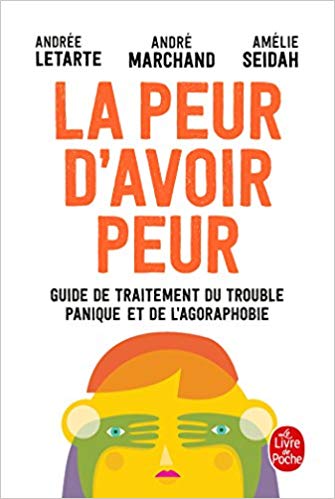 Pour aller plus loin, je vous conseille le petit livre La peur d’avoir peur . Il explique clairement les mécanismes de l’agoraphobie et de la spirale de l’évitement, et contient des exercices pratiques efficaces pour aider à faire reculer la peur.


Je termine en vous disant que si votre cerveau a reussi a vous mettre dans cette situation, c est qu il est tres bien capable de vous en sortir, ce filou.
Bonjour Laura,
et merci pour votre texte.
Si je puis me permettre 3 petites questions :
1/Vous nous dites que vous évitiez de vous retrouver dans la situation de panique, d’aller trop haut. Mais, dans ce cas est-ce encore de l’exposition ? Si l’on recul à chaque fois, mais que l’on essaye d’aller un peu plus loin la fois suivante, cela a visiblement fonctionné pour vous, mais ce n’est pas ce que l’on trouve en général dans les recommandations de TCC où il est suggérez de laisser l’attaque de panique s’installer et de ne pas partir. Facile à dire, moins à faire…. Que faut-il en penser ?
2/ Combien d’exposition, ou sur quelle durée, avez-vous eu concrètement des effets ? Pour ma part, j’ai déclenché récemment une attaque en allant marcher à quelques km de chez moi. Ne voulant pas laisser le truc s’installer, j’y suis retourné tous les jours depuis 10 jours, et j’ai déclenché, pas trop fort, à chaque fois….. Ma méthode n’est elle pas la bonne, ou bien, 10 expos ce n’est en faite pas suffisant !?
3/ Avez-vous noter au cours de votre « expérience » des aggravations, des situations devenues agoraphobes alors qu’elles ne l’étaient pas 3 mois avant ? Car c’est mon cas, et je me demande où cela va s’arrêter !!!! ?
si vous avez 5 mn pour me répondre je vous en remercie.
Bonne journée,
Coucou Pierre,
1. C’est une excellente question ! Effectivement, en TCC on conseille plutôt de rester avec son attaque de panique le temps qu’elle se calme. C’est une excellente méthode que je conseillerai à qui est capable de l’appliquer. Néanmoins, personnellement je n’ai jamais réussi à le faire, mes crises d’angoisse étant vraiment trop intenses, trop effrayantes… j’ai préféré utiliser une méthode plus douce, et elle a très bien fonctionné pour moi. Cela reste de l’exposition car on continue à se confronter à ses angoisses, mais sans prendre le risque de créer une attaque de panique qui soit trop forte et qui risquerait de créer un nouveau « trauma » qui augmente l’appréhension les fois suivantes.
2. Impossible de donner une durée ou un nombre d’exposition exact, tout dépend de chacun et du type d’exposition. Pour ma part, je persévérai jusqu’à ressentir une baisse significative de l’angoisse, et ensuite je passais à l’étape supérieure 🙂
3. Oui, ça m’est arrivé, surtout lorsque j’arrêtais les expositions pendant un moment. Jusqu’à un moment où il n’y a plus de retour en arrière possible, tout redevient de plus en plus facile. Pour arriver à cela, je pense qu’il faut vraiment combiner les expositions + l’apprentissage de la gestion de la crise. A un moment, la crise ne fait plus peur, on a intégré suffisamment de fois qu’on était capable de la stopper dès le moment où elle apparait, et c’est là qu’on guérit véritablement.
Courage 🙂
Bonjour
Avec le confinement tous ces magasins qui m’ont fait perdre les petites habitudes acquises avec la confiance j’ai repris les mauvaises habitudes du drive et ne plus aller dans les magasins. De plus étant seule avec un enfant je me suis fait mettre à la porte de 2 magasins.
Mais je tiens à appuyer cette méthode car ca a fonctionné pour moi je dois juste reprendre depuis le début
Coucou Vick, oui dernièrement j’ai beaucoup pensé aux personnes qui souffrent d’agoraphobie, le confinement ne doit vraiment pas leur faciliter la tâche…
Je conseillerai, dans la mesure du possible, de ne pas totalement abandonner les efforts pendant cette période, il y a toujours moyen de se trouver quelques petites expositions à faire, justement histoire de ne pas devoir tout reprendre depuis le début ensuite.
Je t’envoie tout mon courage !
Merci beaucoup .